Your Cart is Empty
Immerse yourself in a world of selections at one of our
stunning East Coast showrooms. Architessa sources our tile both
domestically and internationally, bringing the best of porcelain,
natural stone, ceramic, and more to convenient locations and through
our national commercial representatives Contact us to
explore an in-store or virtual appointment with an Architessan. Orders
ship worldwide or can be picked up at Architessa's warehouse
locations. Delivery options are available for orders within Virginia,
Maryland, and D.C.

Immerse yourself in a world of selections at one of our stunning East Coast showrooms. Architessa sources our tile both domestically and internationally, bringing the best of porcelain, natural stone, ceramic, and more to convenient locations and through our national commercial representatives.
Contact Us to explore an in-store or virtual appointment with an Architessan. Orders ship worldwide or can be picked up at Architessa's warehouse locations. Delivery options are available for orders within Virginia, Maryland, and D.C.

You've heard this design term tossed around, but exactly what is Millennial Green and why are people talking about it?
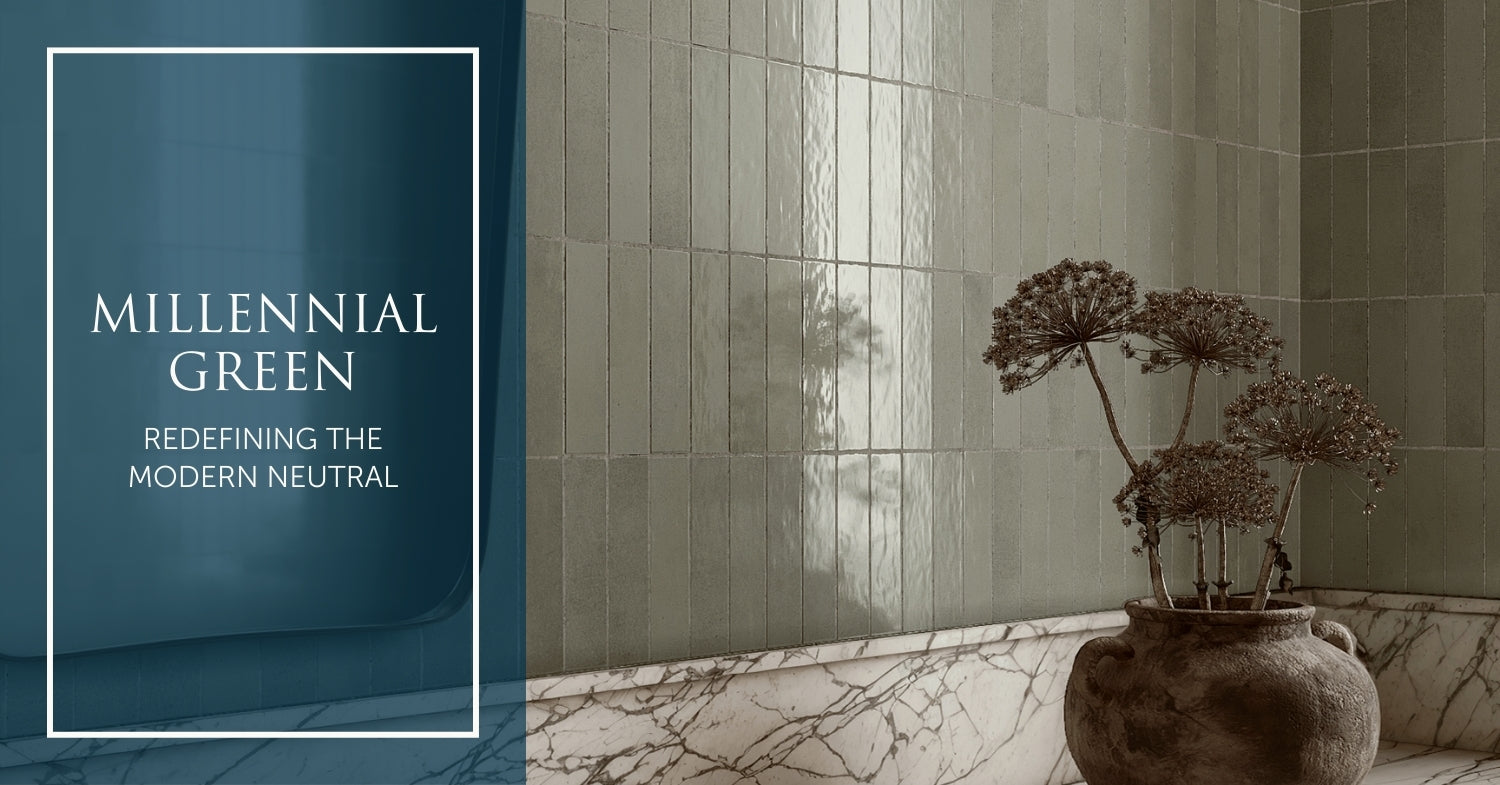
Design trends often evolve alongside cultural shifts, and few colors have captured the design world’s attention quite like Millennial Green. Often described as a softer, more natural evolution of Millennial Gray, this earthy green tone has quietly become a defining color across interiors, architecture, and product design. From kitchens and bathrooms to tile, cabinetry, and textiles, Millennial Green is emerging as a versatile neutral that blends contemporary style with a sense of calm and connection to nature.
Millennial Green refers to a family of muted, nature-inspired greens that feel modern, grounded, and versatile. Rather than bold emeralds or deep, saturated forest tones, Millennial Green leans toward soft, warm shades that feel approachable and livable in everyday spaces.

These hues carry a slightly gray or earthy undertone, which keeps them from feeling overly vibrant - which allows it to work as a neutral backdrop on walls, floors, and furnishings. The result is a green that feels fresh but timeless. A color that strikes the perfect balance of personality and intention that designers often seek in modern interiors.
In many ways, Millennial Green also represents a shift toward biophilic design, where interiors draw inspiration from nature to promote comfort and wellbeing.
Millennial Green isn’t a single color. You can think of it more as a palette of softened, warm-tone greens that work almost like a neutral. The shades that best represent this trend typically share a few characteristics:
Muted Hues - The color feels softened rather than vibrant, avoiding jewel tone, bright grassy or neon greens.
Warm or Gray Undertones -Many Millennial Greens contain subtle beige, yellow, or gray undertones that make them feel earthy rather than cool.
Natural Inspiration -These colors evoke plants, clay minerals, moss, and foliage rather than artificial pigments.
Millennial Green Colors might include:
Because these shades are subdued, they often function as a “new neutral,” pairing easily with materials like natural stone, warm woods, brass, terracotta, and soft whites.
The rise of Millennial Green is closely tied to changing lifestyle values and design preferences. Like with many interior design trends, preferences can shift in response to graphic design, fashion and other influences. The same can be said about this new generational neutral.

For over a decade, Millennial Gray dominated interior design. Gray flooring, gray cabinets, gray walls, and gray tile became a popular choice for designers and homeowners alike. While grays can create a clean, modern aesthetic, it can also feel cold, overly uniform, or lacking warmth.
Millennial Green emerged as anatural evolution of the neutral palette. It offers the same versatility that gray once did but introduces warmth, life, and visual interest.
Perhaps not a direct correlation, but over the last several years there has been a growing emphasis on wellness, sustainability, and nature-inspired living. Green interiors naturally align with these values.
Contemporary interiors have come to value elements like indoor plants, organic materials, and calming spaces.In a world increasingly dominated by screens and urban density, Millennial Green provides a visual reminder of the natural world.
Platforms like Instagram and Pinterest accelerated the popularity of this shade. Designers began pairing green cabinetry, green tile, and green furniture with warm woods, marble, and handmade materials, creating spaces that felt both modern and organic.
Celebrities and renowned designers are not spared from the influences of Millennial Green. Find some inspiration from these stunning green kitchens from the homes of Emma Chamberlain and Dakota Johnson.

One of the reasons Millennial Green has gained such traction is its versatility. It can act as a subtle backdrop or as a defining design feature depending on how it’s used.
Green cabinetry has become a favorite alternative to white or gray kitchens. Sage or olive cabinets paired with natural stone countertops and brass hardware (yes, brass is making its comeback too) create a kitchen that feels both sophisticated and welcoming.
Backsplashes and accent tiles in muted green tones can also introduce color without overwhelming the space.

Bathrooms are another ideal setting for Millennial Green. Soft green tile can create a spa-like environment, especially when paired with warm neutrals, terrazzo look porcelain tile, or marble.
Try out green tile for shower walls, feature niches, and vanity backsplashes.
In living rooms and bedrooms, Millennial Green often appears as paint, textiles, or statement furniture. When layered with natural materials like wood, linen, and wool, the color helps create spaces that feel relaxed and grounded.

PLEAT (coming soon)
Millennial Green is increasingly appearing in hospitality, retail, and workplace design.
In restaurants, cafes, and boutique hotels, muted green tile or painted millwork can introduce warmth and character while pairing beautifully with natural materials like wood, brass, and stone. Retail spaces often use Millennial Green to create a calming backdrop that allows merchandise to stand out without overwhelming the space.
Workplace environments are also embracing these softer greens as part of biophilic design strategies, incorporating the color into wall finishes, flooring accents, furniture, or tile installations to promote comfort and a sense of tranquility. The result is a space that feels more relaxed and human-centered.
Looking for a way to leverage green tile? For designers working with tile and stone, Millennial Green can appear in:
As with many design trends, Millennial Green has sparked some debate.
Some designers see it as a thoughtful evolution in color use and a shift toward more natural palettes that reflect contemporary values like sustainability and wellness. Because many Millennial Greens are muted and earthy, supporters argue the color will age far more gracefully than brighter trends.
Others worry it may follow the same path as Millennial Gray. As the shade becomes more widely adopted in builder homes, retail spaces, and mass-market products, critics fear it could become overused and lose its original sense of intentional design.
In reality, the longevity of Millennial Green may come down to how it’s used. When paired with authentic materials, layered textures, and thoughtful design, these earthy greens can feel timeless. When applied without context or contrast, however, the color risks becoming just another passing trend.
Whether it ultimately becomes a lasting neutral or a snapshot of this design era, Millennial Green reflects a broader shift in how people want their spaces to feel. Warmer, softer, and more connected to nature, it offers an alternative to the stark minimalism that dominated the past decade.
For designers and homeowners alike, Millennial Green represents an opportunity to introduce color in a way that feels calm and contemporary.