Tu carrito está vacío
Immerse yourself in a world of selections at one of our
stunning East Coast showrooms. Architessa sources our tile both
domestically and internationally, bringing the best of porcelain,
natural stone, ceramic, and more to convenient locations and through
our national commercial representatives Contact us to
explore an in-store or virtual appointment with an Architessan. Orders
ship worldwide or can be picked up at Architessa's warehouse
locations. Delivery options are available for orders within Virginia,
Maryland, and D.C.

Immerse yourself in a world of selections at one of our stunning East Coast showrooms. Architessa sources our tile both domestically and internationally, bringing the best of porcelain, natural stone, ceramic, and more to convenient locations and through our national commercial representatives.
Contact Us to explore an in-store or virtual appointment with an Architessan. Orders ship worldwide or can be picked up at Architessa's warehouse locations. Delivery options are available for orders within Virginia, Maryland, and D.C.

When installing tile the main focus often falls on the field tiles, but specialty tile pieces can elevate a tile project from standard to stunning. Finishing elements, like bullnose, profile trims, stair treads, and coping can provide both functional transitions and aesthetic flair. Some tile finishing elements even add safety and accessibility to your space. In this guide, we’ll explore the different types of specialty tile pieces and how to use them effectively.
Specialty trim pieces like bullnose and cove base provide the finishing touches that make tile installations look polished and complete. They serve as transition pieces - most often on wall applications.
Bullnose trim- Bullnose tiles feature a rounded edge, perfect for softening the exposed edges of backsplashes, shower niches, and countertops. They create smooth transitions and eliminate sharp edges, especially in wet areas. They come in single edge or corner edge varieties.
Cove Base trim- Edge tiles that have a curved bottom edge to create a clean transition from wall to floor. Ideal for kitchens, bathrooms, laundry rooms, or commercial spaces, they enhance hygiene by preventing moisture and debris buildup at the base of walls. These are most often seen in commercial applications where there might be more rigorous mopping, spills, or exposure to other liquids.

Why Use Bullnose Tile?
Bullnose tiles help create a safer environment by eliminating sharp tile edges and are especially useful for smooth transitions in wet areas.
Why Use Cove Base Tile?
What are Profile Trims?
Profile trims (also known as "Tile Edge Trim", "Tile Edging", or sometimes "Schluter Trim") are metal or PVC edge protectors that serve as a sleek, contemporary alternative to bullnose tiles. They cap off tile edges cleanly while protecting them from chips and wear. These trims are available in finishes like matte black, brushed nickel, and chrome to match your fixtures.

Types of Profile Trims:
Schluter Rondec – A rounded, symmetrical edge for smooth, curved transitions
Schluter Jolly – A minimalist, square-edge trim perfect for clean, modern lines
Schluter Schiene – A straight-edged transition strip often used where tile meets other flooring or to cap raw tile edges
Applications for Profile Trims:
Tile edge trim options vary in shape, including L-shaped and square profiles, and are essential in creating a polished, durable edge in modern installations. For more trim and transition options, check out Thresholds & Trim at Architessa.
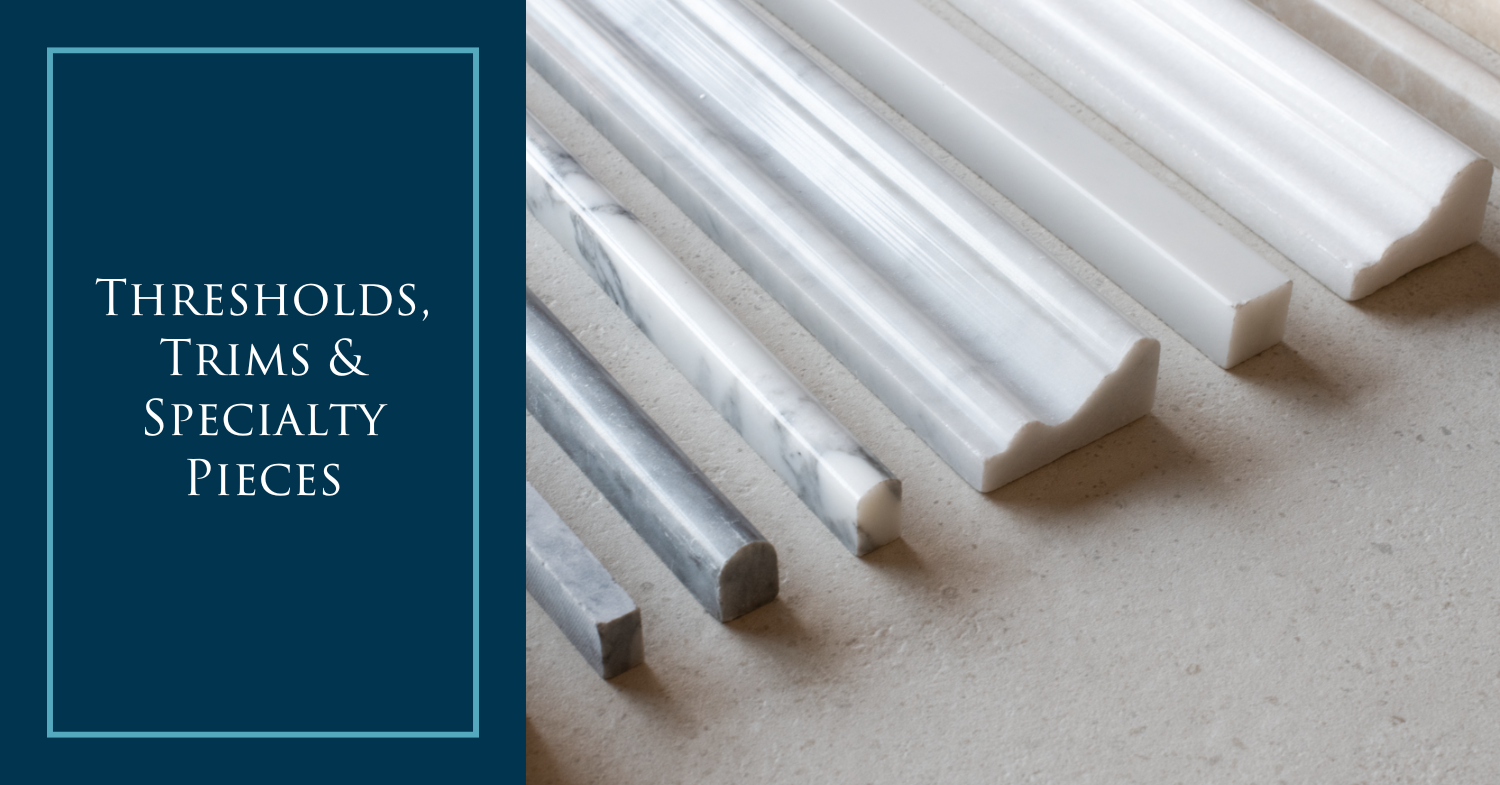
Bar liners and quarter round tile pieces are often used to add subtle but elegant detailing to your tile layout. They can also serve as a finishing edge to applications like backsplashes and shower niches.

Decorative Moldings - come in various shapes and patterns (fluted, rope, or embossed) and are used to elevate the overall design by adding architectural detail to tiled walls, mirrors, or fireplace surrounds.

Bar Liners and Trims Uses:
What is a Threshold?
Thresholds and sills are functional specialty pieces used at transitions between different flooring materials or between rooms. A threshold typically spans the gap between two spaces (sometimes connecting different flooring types), while sill pieces are commonly used for shower curbs, entryways, or window ledges.
Different styles of tile or stone thresholds can accomplish different goals:

Threshold Tiles Uses:

These pieces are crucial in both residential and commercial applications, especially where durability and water resistance are key. Explore a wide selection of thresholds and trim options here.
When you're hitting the pool deck in the summer, you might not always notice the pool tiles that make for a safe and stylish install.
Coping tiles are the finishing edge used around the perimeter of pools and spas. They provide both a visual frame and a functional barrier, helping protect the pool shell and offer a safe, rounded surface for swimmers. Splashing water needs somewhere to go - that's where drain and pool grid cover tile pieces come in handy.

Types of Pool Tiles:
Pool coping is often installed alongside tile pavers for surrounding decks, ensuring a cohesive, slip-resistant, and weather-resistant finish. If you’re designing an outdoor retreat, this detail is both essential and stylish.
Tiling stairs adds drama and design continuity, but it also introduces the need for specialized pieces like stair treads and stairnose tiles. These pieces are designed with either a built-in bullnose edge or texturing to improve grip and visibility.

Stair Tread and Stairnose Uses:
Stair tread tiles and stairnose pieces help prevent slips while also protecting the tile edges from wear. Some stair treads are made with built-in grooves or grip features for added safety. They’re available in coordinating designs to keep your aesthetic intact while meeting safety standards.
------
Specialty tile pieces such as bullnose, profile trims, stair treads, thresholds, and pool coping are not just decorative extras—they’re essential to a high-quality tile installation. These elements protect your edges, provide transitions, and elevate your design with professional-grade finishing touches.
Whether you're tiling a luxurious bath, a tiled pool patio with coping and pavers, or a modern staircase with tile trim and stair treads, don’t overlook these essential components. They’re the small details that make a big difference.