Your Cart is Empty
Immerse yourself in a world of selections at one of our
stunning East Coast showrooms. Architessa sources our tile both
domestically and internationally, bringing the best of porcelain,
natural stone, ceramic, and more to convenient locations and through
our national commercial representatives Contact us to
explore an in-store or virtual appointment with an Architessan. Orders
ship worldwide or can be picked up at Architessa's warehouse
locations. Delivery options are available for orders within Virginia,
Maryland, and D.C.

Immerse yourself in a world of selections at one of our stunning East Coast showrooms. Architessa sources our tile both domestically and internationally, bringing the best of porcelain, natural stone, ceramic, and more to convenient locations and through our national commercial representatives.
Contact Us to explore an in-store or virtual appointment with an Architessan. Orders ship worldwide or can be picked up at Architessa's warehouse locations. Delivery options are available for orders within Virginia, Maryland, and D.C.

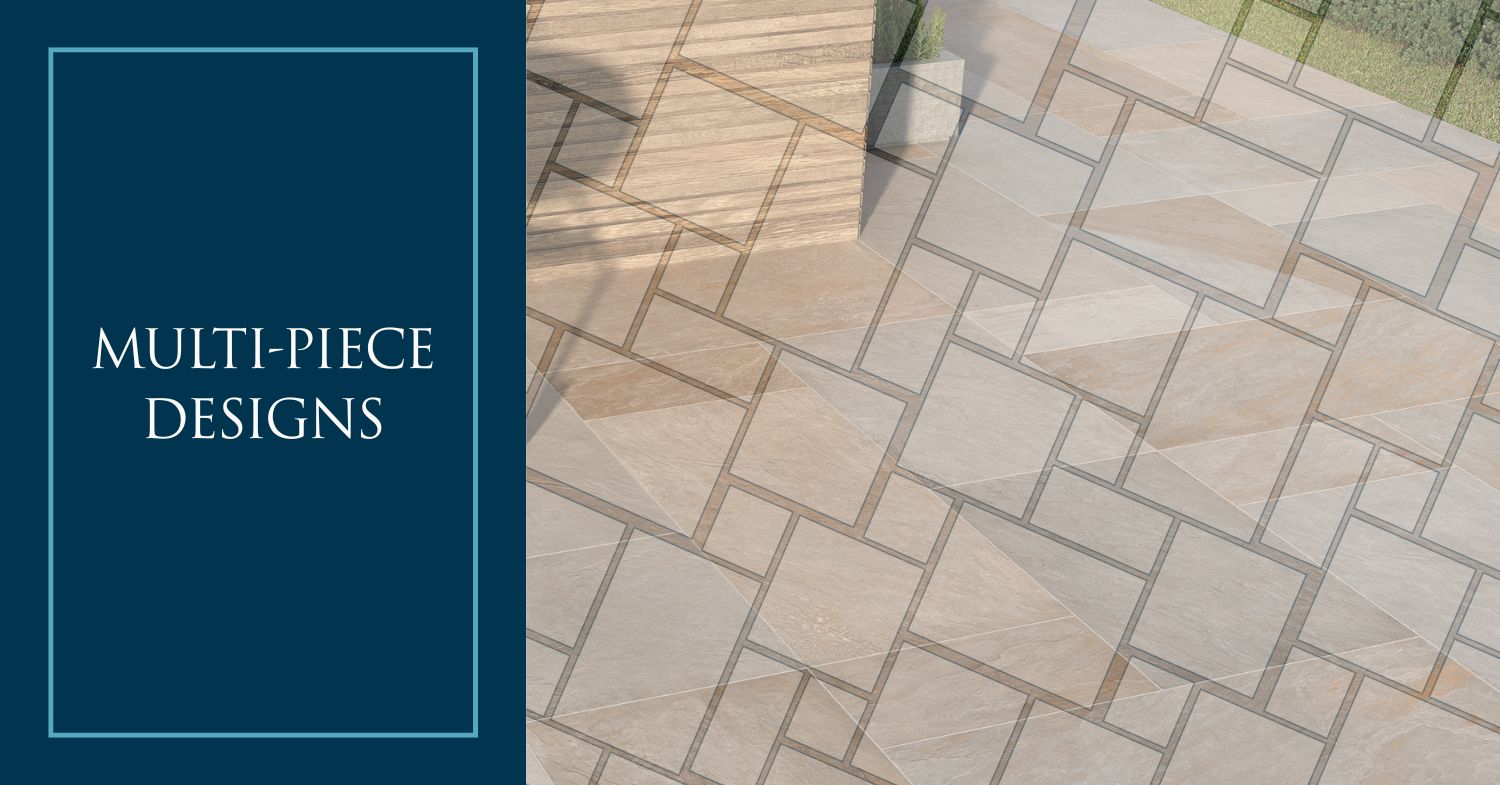
Multi-piece tile designs, also known as modular or pattern tile layouts, are a striking way to elevate any tiled surface. By combining tiles of different sizes into a unified design, you create visual interest, texture, and a more custom, high-end aesthetic. These patterns are not only popular indoors for bathrooms, kitchens, and feature walls, but have become a go-to choice for outdoor pavers, patios, and landscape architecture as well. The variety in shape and scale helps break up large expanses of hardscape, making outdoor spaces feel more dynamic and refined.
Explore this blog to learn the benefits of multi-piece tile designs, consider essential planning considerations like tile thickness, calibration, and optimal grout joints, and discover visual examples of real modular layouts that you can try on your next design project.
Multi-piece tile designs are used across a wide range of applications - from residential floors and walls to commercial lobbies and outdoor patios. They're especially common in large format tile floor installations, decorative backsplashes, and outdoor paving projects, where the variation in tile size helps to create movement and reduce visual monotony across expansive surfaces.
Visual Interest: Multi-piece patterns break away from the monotony of single-size tile layouts. They introduce rhythm and movement to a surface.
Custom Look: These layouts often feel more intentional and upscale, mimicking the elegance of natural stone installations or European-style floors.
Design Flexibility: Using different sizes allows you to balance proportions in a space, highlight architectural features, or create focal points.
Masking Imperfections: Multi-size patterns can be more forgiving in camouflaging uneven surfaces or irregular room shapes.
The example Multi-Piece Design layouts below will get you started with some tired-and-true layouts, but you can work with a designer or installer to create your own repeating tile patterns.
Multi-piece floor tile layouts can dramatically impact the feel of a space, especially in large areas. These patterns work particularly well for outdoor pavers or large format flooring applications.
The sizes shown below are just one option for these pattern designs, but they can be scaled to incorporate other tile sizes with relative dimensions.

Brick Joint(24x24, 12x24, 14x14, 9x9)
Modified Hopscotch(18x18, 12x18, 12x12, 6x6)
Modular Pinwheel(18x18, 12x18, 12x12, 6x6)

Modular Rectangle(24x48, 24x36, 24x24, 12x24)
Standard Versailles(24x36, 24x24, 12x24, 12x12)

Checker(24x24, 12x12)
Pinwheel(12x24, 12x12)
These modular patterns use a mix of square and rectangular tiles to create rhythm and sophistication, ideal for entryways, kitchens, and open-plan spaces.
Herringbone and weave patterns are common backsplash layouts, but they can also be made with larger format tiles. These patterns work especially well on walls or backsplashes, offering classic aesthetics with a twist when you incorporate multiple sizes.
These layouts showcase how smaller-format tiles can be repeated and rotated to create dynamic, visually interesting wall applications.


Herringbone Classic(3x6)
Herringbone Thin(2x6)
Herringbone Extended(3x6, 3x3)
Weave 2x6
Multi-piece layouts may look effortless when finished, but they require thoughtful planning to ensure success. Because these patterns involve combining tiles of different sizes, any inconsistencies in tile thickness, size calibration, or grout spacing can quickly lead to alignment issues or uneven surfaces. Taking time to plan around the following considerations will help you achieve a cohesive, professional-looking installation.
Tiles in different sizes may come in slightly different thicknesses, even within the same collection. These variations can affect both the aesthetic and the functionality of the surface if not properly accounted for.
Tip: A professional tile installer can adjust the amount of setting material(like thinset) beneath each tile to ensure the finished surface is level. Always check thickness specs before finalizing your tile selection.
Most tiles are sold by nominal size, which is a rounded measurement. For example, a tile listed as 12" x 12" may actually measure 11.8" x 11.8". This can have a significant impact when laying out a multi-piece pattern. Be especially diligent in checking sizing when mixing tiles from different manufacturer lots or collections.
Calibration is the process by which tiles are sorted by their actual post-firing size, minimizing variation within and between boxes. This is especially important when combining multiple sizes or tiles from multiple manufacturer lots. Tiles may be the same listed size but still differ slightly in reality.
Tip: Always confirm both the actual size and calibration of your tiles with the manufacturer. Using uncalibrated tiles in a modular pattern can lead to misaligned grout joints and visual inconsistencies.
Grout joints play a crucial role in the success of a multi-piece tile layout. Because you’re mixing sizes (and potentially minor differences in calibration) a wider grout joint allows for necessary adjustments during installation.
Recommended minimum grout joint: 3/8"
Be prepared for slight variations in grout joint width throughout the layout to accommodate different tile sizes and ensure proper alignment.
Tip: Choose a grout color that complements all tile sizes and tones used in your design. This can help unify the pattern and soften minor layout adjustments.
Consult our Grout 101 page for more info on grout joints and other tips.
Multi-Piece Tile Designs can transform your space, but they also come with more complexity than standard layouts. Work closely with your installer to select compatible tiles and develop a layout that suits both your style and the specific dimensions of your project.
Download our Multi Piece Design reference brochure